Armaan Hospital
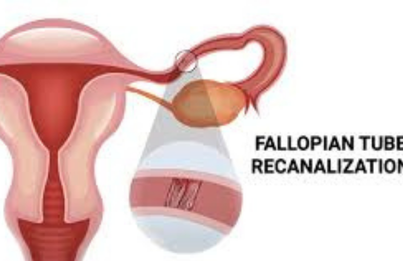
Fallopian Tube Recanalization
Fallopian Tube Recanalization is a minimally invasive fertility-enhancing procedure used to open blocked fallopian tubes, especially when the blockage is located near the uterine end of the tube (proximal tubal blockage). For women facing infertility due to tubal obstruction, this procedure may offer a valuable opportunity to restore natural fertility and improve the chances of conception without immediately moving to advanced fertility treatments.
At our fertility center, we provide expert evaluation and personalized care for women with tubal factor infertility, including guidance on whether Fallopian Tube Recanalization may be a suitable treatment option. Our goal is to offer safe, effective, and evidence-based reproductive care with a focus on preserving fertility whenever possible.
What is Fallopian Tube Recanalization?
Fallopian Tube Recanalization is a specialized procedure used to open a blocked fallopian tube, usually when the blockage is present at the proximal part of the tube, close to where it joins the uterus. In this procedure, a very thin catheter or guidewire is gently passed through the cervix and uterus into the blocked fallopian tube under imaging guidance to clear the obstruction and restore tubal patency.
The procedure is often performed in selected women with proximal tubal blockage diagnosed on tests such as HSG (Hysterosalpingography).
If successful, fallopian tube recanalization may allow the egg and sperm to meet naturally, improving the possibility of spontaneous pregnancy.
Benefits of Fallopian Tube Recanalization
Fallopian Tube Recanalization offers several important benefits in selected patients:
- Minimally invasive fertility-restoring procedure
- Can reopen proximally blocked fallopian tubes
- May allow natural conception
- Avoids or delays the need for IVF in selected cases
- Usually performed as a day-care procedure
- No large surgical incision
- Short recovery time
- Useful in carefully selected tubal factor infertility cases
- Can be repeated in some selected situations if needed